TMT bars are the backbone of every reinforced concrete structure. From residential homes and commercial buildings to bridges and industrial projects, the strength and durability of a structure largely depend on the quality of the reinforcement steel used. Although modern TMT bars are designed to offer excellent strength and corrosion resistance, improper storage, handling, and exposure to moisture can lead to rust formation.
Many builders assume that any rust on a TMT bar makes it unusable, but this is not always true. Light surface rust is generally harmless and can be cleaned before use, whereas deep corrosion can significantly reduce the strength of the steel and compromise the safety of the structure.
At Maithan Steel, we believe that using premium-quality TMT bars along with proper storage and maintenance practices is essential for long-lasting construction. In this guide, we explain how rust forms, the different types of rust, the ideal warehouse conditions, and ten practical tips to protect TMT bars from corrosion.
What is Rust?
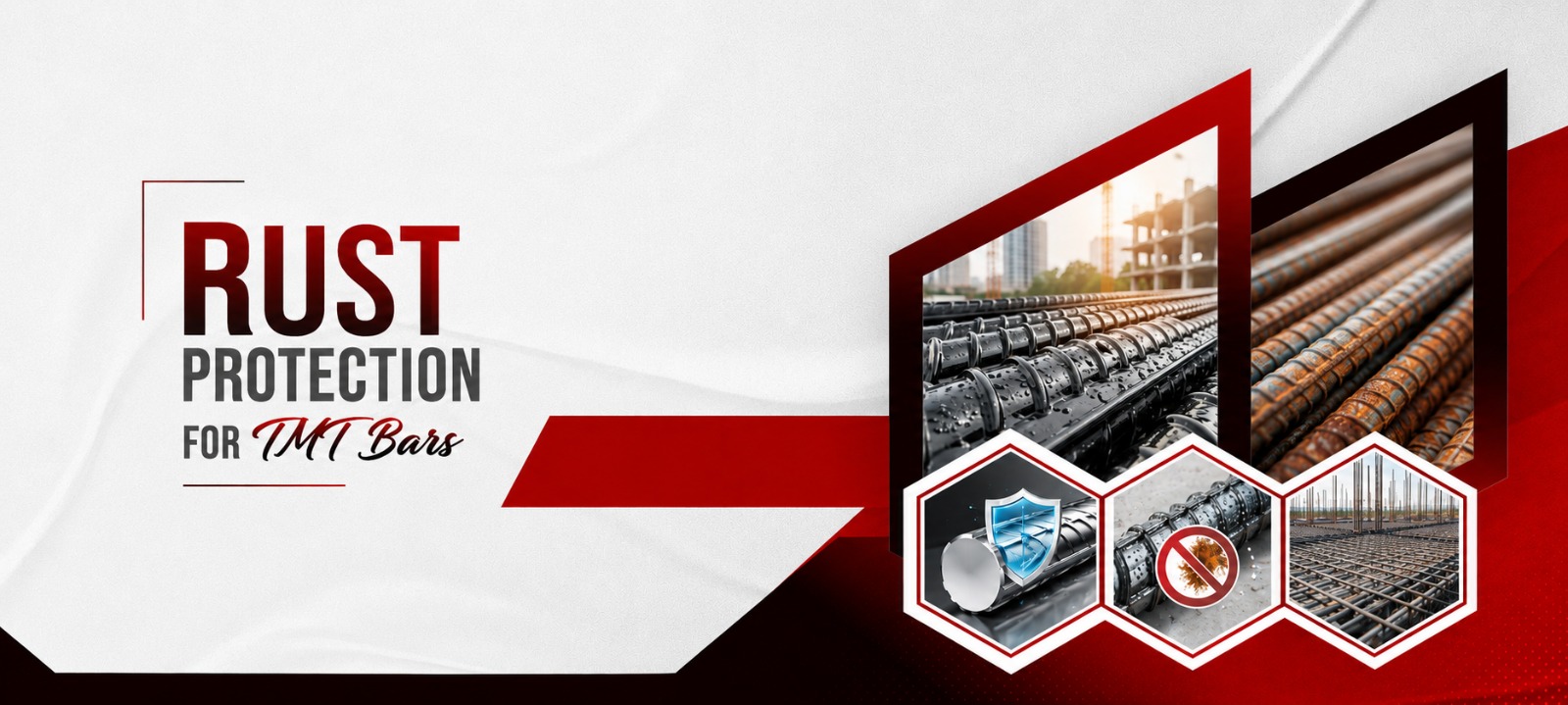
Rust is a reddish-brown layer that forms when iron reacts with oxygen and moisture present in the environment. Since TMT bars are primarily made of steel, which contains iron, they can develop rust if exposed to water, humidity, or corrosive chemicals for an extended period.
Rust gradually eats away the surface of the steel, reducing its thickness and affecting its mechanical properties. If corrosion continues unchecked, it can weaken the reinforcement and shorten the lifespan of the building.
10 Tips from Maithan Steel for Rust Protection in TMT Bars
1. Store TMT Bars in a Covered Warehouse
Always store TMT bars under a roof whenever possible. A covered warehouse protects the bars from rain, direct sunlight, and excessive moisture, reducing the chances of corrosion.
2. Keep the Warehouse Dry and Well Ventilated
Proper airflow is essential for preventing moisture buildup. A dry and ventilated warehouse keeps humidity under control and creates a better storage environment for steel reinforcement.
3. Never Store Bars Directly on the Ground
Ground moisture is one of the biggest reasons for rust formation. Always place TMT bars on wooden blocks, steel racks, or concrete sleepers to keep them elevated above the floor.
4. Protect TMT Bars During the Monsoon
Heavy rainfall and increased humidity during the monsoon season significantly increase the risk of corrosion. Cover the bars with waterproof tarpaulin or HDPE sheets while ensuring there is enough ventilation to avoid trapped condensation.
5. Prevent Water from Collecting Around the Steel
Standing water should never be allowed near stored TMT bars. Check the warehouse regularly for roof leaks, pipe leaks, or poor drainage that may expose the steel to moisture.
6. Follow the First-In, First-Out Method
Older stock should always be used before newly delivered material. This inventory management practice reduces the storage duration and lowers the chances of rust developing over time.
7. Inspect the Bars Regularly
Routine inspections help identify early signs of corrosion before they become severe. Check for discoloration, rust flakes, pitting, or scaling and take corrective action immediately.
8. Clean Light Surface Rust Before Use
If only a thin layer of surface rust is present, clean the bars using a wire brush before placing them in concrete. Removing loose rust ensures better bonding between steel and concrete.
9. Keep Steel Away from Chemicals
Acids, salts, fertilizers, and industrial chemicals accelerate corrosion. Store TMT bars away from chemical storage areas and protect them from exposure to aggressive substances.
10. Choose Premium Quality TMT Bars
The best way to reduce corrosion-related problems is to start with high-quality TMT bars manufactured under strict quality standards. Premium TMT bars offer better corrosion resistance, superior strength, and longer service life, making them a reliable choice for all types of construction projects.
How Does Rust Form on TMT Bars?
Rust develops through a natural chemical reaction called oxidation. When iron comes into contact with oxygen and water, iron oxide is formed.
This process becomes much faster when TMT bars are exposed to rainwater, high humidity, coastal air, standing water, or industrial pollutants. Improper storage in damp warehouses or direct contact with wet soil also accelerates corrosion.
While rust cannot be completely prevented in nature, it can be significantly minimized by following proper storage and handling practices.
Types of Rust Found on TMT Bars
Different types of rust affect TMT bars in different ways. Understanding them helps determine whether the steel is still suitable for construction.
Surface Rust
Surface rust is a thin reddish layer that forms on the outer surface of the bar. It usually appears after temporary exposure to moisture and does not significantly affect the strength of the steel. This type of rust can generally be removed using a wire brush before construction.
Moderate Rust
Moderate rust develops after prolonged exposure to moisture. The surface becomes rough, and visible scaling may appear. Although the bar may still be usable after cleaning and inspection, it should not be ignored.
Pitting Corrosion
Pitting corrosion is one of the most dangerous forms of rust. Instead of spreading evenly across the surface, it creates deep holes or pits in the steel. These pits reduce the effective diameter of the bar and create weak points that can fail under heavy loads.
Scaling Corrosion
Scaling corrosion occurs when thick layers of rust begin to peel away from the surface. This indicates that the steel has experienced significant corrosion, and its strength may have been considerably reduced.
Galvanic Corrosion
Galvanic corrosion occurs when steel comes into contact with another metal in the presence of moisture. This type of corrosion is commonly found in coastal and industrial environments.
Which Type of Rust is Most Dangerous?
Among all forms of corrosion, pitting corrosion is considered the most dangerous.
Unlike surface rust, pitting corrosion penetrates deep inside the steel without affecting the surrounding area. These tiny pits reduce the cross-sectional area of the TMT bar and create stress concentration points that can lead to sudden structural failure.
For critical structural applications, heavily pitted TMT bars should never be used.
Ideal Warehouse Temperature for Storing TMT Bars
Temperature alone does not cause rust, but when combined with high humidity, it creates ideal conditions for corrosion.
The recommended warehouse temperature for storing TMT bars is between 20°C and 35°C. More importantly, the storage area should maintain a relative humidity below 60% whenever possible.
The warehouse should have proper ventilation to allow air circulation and prevent moisture accumulation. During the monsoon season, additional care should be taken to keep the storage area dry.
Additional Best Practices for Construction Sites
Proper storage does not end at the warehouse. Construction sites should also maintain good handling practices. Avoid dragging bars over wet surfaces, remove accumulated mud before use, and keep reinforcement away from curing water or chemical storage areas. Proper handling helps preserve the quality of the steel until it is embedded in concrete.
Common Misconceptions About Rust on TMT Bars
Many people believe that every rusted TMT bar should be rejected, but this is not true. Light surface rust is generally acceptable after cleaning, while deep corrosion and pitting require careful inspection. Another common misconception is that painting TMT bars before concreting prevents rust. In reality, paint can reduce the bond between steel and concrete and is generally not recommended unless specified by the structural engineer.
Why Choose Maithan Steel TMT Bars?
Maithan Steel manufactures premium-quality TMT bars using advanced production technology and strict quality control processes. The bars are designed to deliver high strength, excellent ductility, and improved corrosion resistance for residential, commercial, and infrastructure projects.
When combined with proper storage, handling, and maintenance practices, Maithan Steel TMT bars provide long-lasting structural performance and enhanced safety for every construction project.
Conclusion
Rust is a natural process, but it does not have to compromise the strength of your construction project. Understanding how rust forms, identifying the different types of corrosion, and following proper storage practices can significantly increase the lifespan of TMT bars.
Maintaining a dry warehouse, controlling humidity, storing bars above ground level, preventing water accumulation, and choosing premium-quality reinforcement steel are simple yet highly effective measures to reduce corrosion.
By following these recommendations from Maithan Steel, builders, contractors, and homeowners can ensure stronger, safer, and more durable structures that stand the test of time.