When building a home, one of the most important decisions you make is choosing the right construction materials. While people often spend considerable time selecting tiles, paints, doors, and interior designs, the quality of the steel reinforcement used in the structure is far more critical. The strength, durability, and safety of a building depend heavily on the quality of the TMT (Thermo-Mechanically Treated) bars used during construction.
For middle-class families, a home is often the result of years of savings and financial planning. For high-net-worth individuals, a luxury residence is a significant investment that reflects both lifestyle and legacy. Regardless of the project’s size, nobody wants to compromise on structural safety. This is where BIS standards become important.
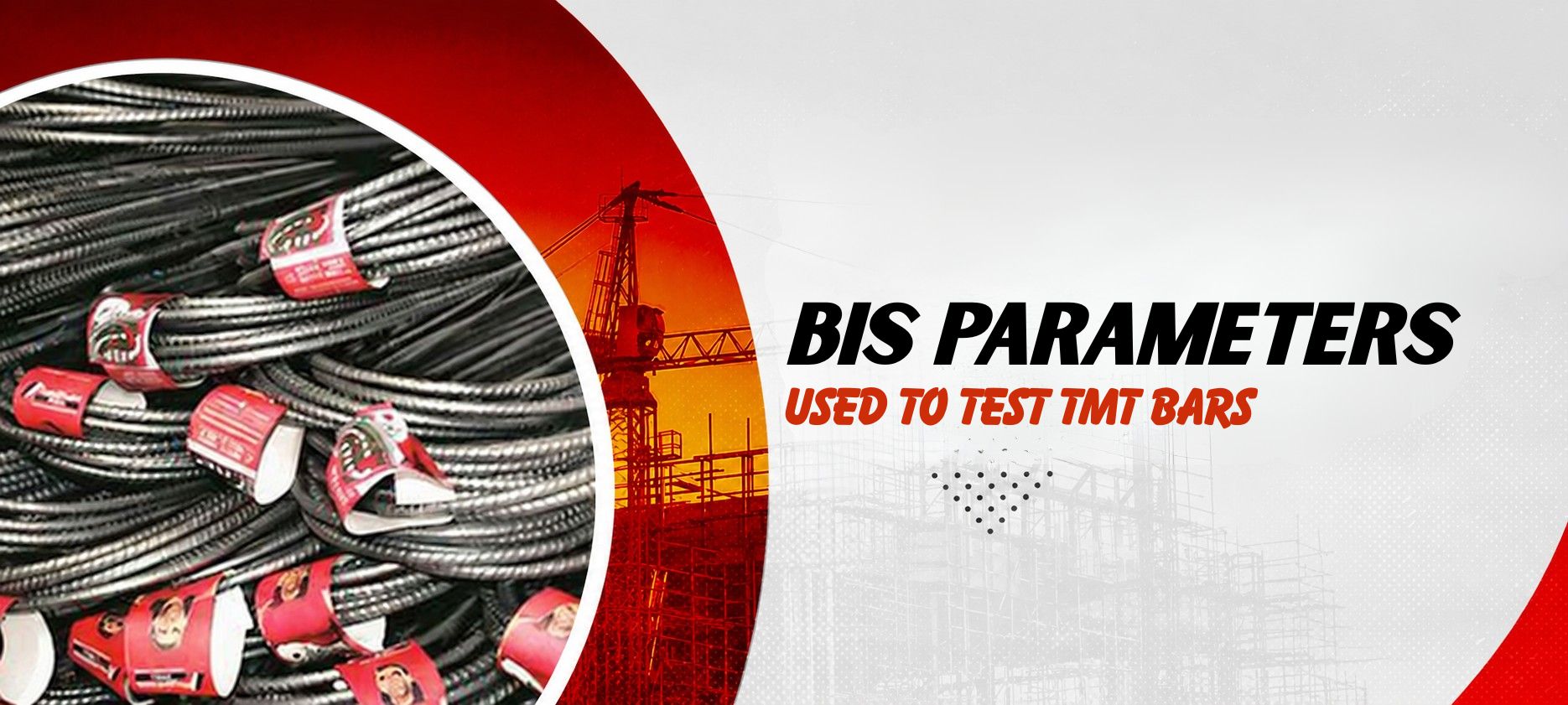
The Bureau of Indian Standards (BIS) has established strict guidelines for testing TMT bars to ensure they meet quality and safety requirements. These tests evaluate the strength, flexibility, chemical composition, and durability of steel before it reaches the market.
BIS Standards for TMT Bars
The Bureau of Indian Standards regulates the quality of TMT bars through the specification known as IS 1786. This standard defines the mechanical and chemical properties that reinforcement steel must meet before it can be used in construction.
The objective of BIS testing is to ensure that TMT bars provide adequate strength, flexibility, and durability under various conditions. Whether a building faces heavy loads, extreme weather, or seismic activity, BIS-certified TMT bars are designed to perform reliably.
When purchasing steel, homeowners should always verify that the product complies with BIS standards, as this certification serves as a mark of quality and safety.
Why BIS Testing Matters
Many people assume that all TMT bars available in the market are similar. In reality, there can be significant differences in quality between manufacturers.
Substandard steel may look identical to genuine TMT bars, but it often lacks the required strength and durability. Such products can compromise the structural integrity of a building and increase maintenance costs over time.
BIS testing helps eliminate these risks by ensuring that every certified TMT bar meets strict quality requirements. This gives homeowners confidence that the steel used in their project is capable of supporting the structure safely for decades.
Yield Strength
One of the most important BIS parameters is yield strength.
Yield strength refers to the amount of stress a TMT bar can withstand before it begins to deform permanently. In simple terms, it indicates how much load the steel can bear without losing its shape.
Different grades of TMT bars have different minimum yield strength requirements. For example, Fe 500 bars must provide a minimum yield strength of 500 N/mm², while Fe 550 bars must meet a higher requirement of 550 N/mm².
Higher yield strength allows engineers to design stronger structures using fewer bars, which can improve construction efficiency while maintaining safety.
For homeowners, this parameter is crucial because it directly affects the load-bearing capacity of the building.
Tensile Strength
Another critical BIS parameter is tensile strength.
Tensile strength measures the maximum force a TMT bar can withstand before breaking. This property determines how effectively the steel can resist stretching forces within a structure.
Buildings are constantly exposed to different types of stress, including wind pressure, traffic vibrations, and shifting loads. TMT bars with high tensile strength help maintain structural stability under these conditions.
BIS standards specify minimum tensile strength requirements for different grades of reinforcement steel. Manufacturers must ensure their products meet or exceed these limits before they can receive certification.
At Maithan Steel, stringent quality control measures ensure that every TMT bar delivers the required tensile performance for demanding construction applications.
Yield Strength to Tensile Strength Ratio
BIS standards do not only evaluate individual strength values. They also assess the relationship between yield strength and tensile strength.
This ratio is important because it indicates how much additional stress the steel can absorb after yielding but before breaking.
A good balance between these two properties ensures that the steel can provide warning signs before failure occurs. This characteristic is particularly valuable during earthquakes and other extreme events where sudden structural failure can be catastrophic.
A properly balanced ratio contributes to the overall safety and resilience of reinforced concrete structures.
Elongation Test
Elongation is another vital BIS testing parameter.
This test measures how much a TMT bar can stretch before it breaks. It reflects the ductility or flexibility of the steel.
High elongation values indicate that the steel can absorb significant energy without snapping. This property is especially important in seismic zones where buildings experience dynamic movement during earthquakes.
When steel possesses adequate elongation, it allows structures to bend and dissipate energy rather than collapsing suddenly.
For homeowners constructing properties in earthquake-prone regions, choosing TMT bars with excellent elongation characteristics can significantly improve structural safety.
Bend Test
The bend test is one of the most practical methods used to evaluate TMT bar quality.
During this test, a steel sample is bent to a specified angle according to BIS guidelines. The objective is to assess whether the bar can withstand bending without developing cracks or fractures.
Since reinforcement bars often need to be bent during construction, this test helps verify their flexibility and workability.
A genuine BIS-certified TMT bar should successfully pass the bend test while maintaining its structural integrity.
Re-Bend Test
The re-bend test is an extension of the bend test and provides additional information about the steel’s ductility.
In this procedure, the bar is first bent and then aged under controlled conditions before being bent again in the opposite direction.
The steel must withstand this process without cracking.
The re-bend test is particularly important because it simulates real-world conditions where reinforcement bars may experience repeated stress over time.
TMT bars that pass this test offer enhanced reliability and long-term durability.
Chemical Composition Analysis
The chemical composition of steel plays a major role in determining its performance.
BIS standards specify limits for elements such as carbon, sulphur, phosphorus, and manganese.
Carbon influences strength and hardness, while sulphur and phosphorus can negatively affect ductility if present in excessive amounts.
Maintaining the correct chemical balance helps ensure that the steel remains strong, flexible, and resistant to cracking.
Manufacturers must carefully control the chemical composition during production and verify compliance through laboratory testing.
This process helps guarantee consistent quality across every batch of TMT bars.
Carbon Equivalent Value
Another important BIS parameter is the Carbon Equivalent Value (CEV).
This measurement evaluates the combined effect of various alloying elements present in the steel.
The carbon equivalent influences weldability and overall mechanical performance. Excessively high values can make steel brittle and difficult to weld, while appropriate values enhance structural reliability.
By controlling the carbon equivalent, manufacturers ensure that TMT bars can be used safely in various construction applications without compromising performance.
Mass Per Meter Test
BIS standards also specify acceptable tolerances for the weight of TMT bars.
Every bar diameter has a standard mass per meter. Manufacturers must ensure that their products remain within the permitted variation limits.
This test helps verify that the bar contains the correct amount of steel.
Underweight bars may reduce construction costs initially but can significantly compromise structural strength. Therefore, checking weight compliance is an important aspect of quality assurance.
Dimensional Accuracy
The diameter and shape of TMT bars must meet specified standards to ensure proper reinforcement performance.
BIS testing includes dimensional inspections to verify that bars are manufactured within acceptable tolerances.
Accurate dimensions contribute to proper load distribution, improved concrete bonding, and overall structural stability.
Even small variations can affect engineering calculations and construction quality, making dimensional accuracy an essential parameter.
Why BIS-Certified TMT Bars Are Essential for Premium Construction
For middle-class homeowners, a house often represents a lifetime achievement. For affluent property owners, premium residences require construction materials that match their investment expectations.
In both cases, BIS-certified TMT bars provide assurance that the steel has undergone rigorous testing and meets established quality benchmarks.
Certified products offer greater confidence regarding structural strength, earthquake resistance, durability, and long-term performance.
Choosing certified steel helps protect both financial investment and family safety.
Why Builders Trust Maithan Steel
At Maithan Steel, quality is not just a requirement—it is a commitment.
Every TMT bar is manufactured using advanced technology and subjected to rigorous testing procedures to ensure compliance with BIS standards. The company’s focus on quality control, innovation, and customer satisfaction has made it a trusted choice among homeowners, engineers, architects, and builders.
Whether you are constructing a family home, luxury villa, apartment complex, or commercial property, Maithan Steel provides reinforcement solutions designed to deliver strength, reliability, and peace of mind.
Conclusion
TMT bars form the hidden framework that supports every building. While they may not be visible after construction is complete, their quality has a direct impact on the safety and lifespan of the structure.
BIS testing evaluates crucial parameters such as yield strength, tensile strength, elongation, bendability, chemical composition, carbon equivalent value, dimensional accuracy, and weight consistency. Together, these tests ensure that TMT bars meet the highest standards of performance and reliability.
When selecting steel for your next construction project, always choose BIS-certified products from trusted manufacturers like Maithan Steel. Doing so ensures that your home or investment property is built on a foundation of quality, strength, and long-term security.