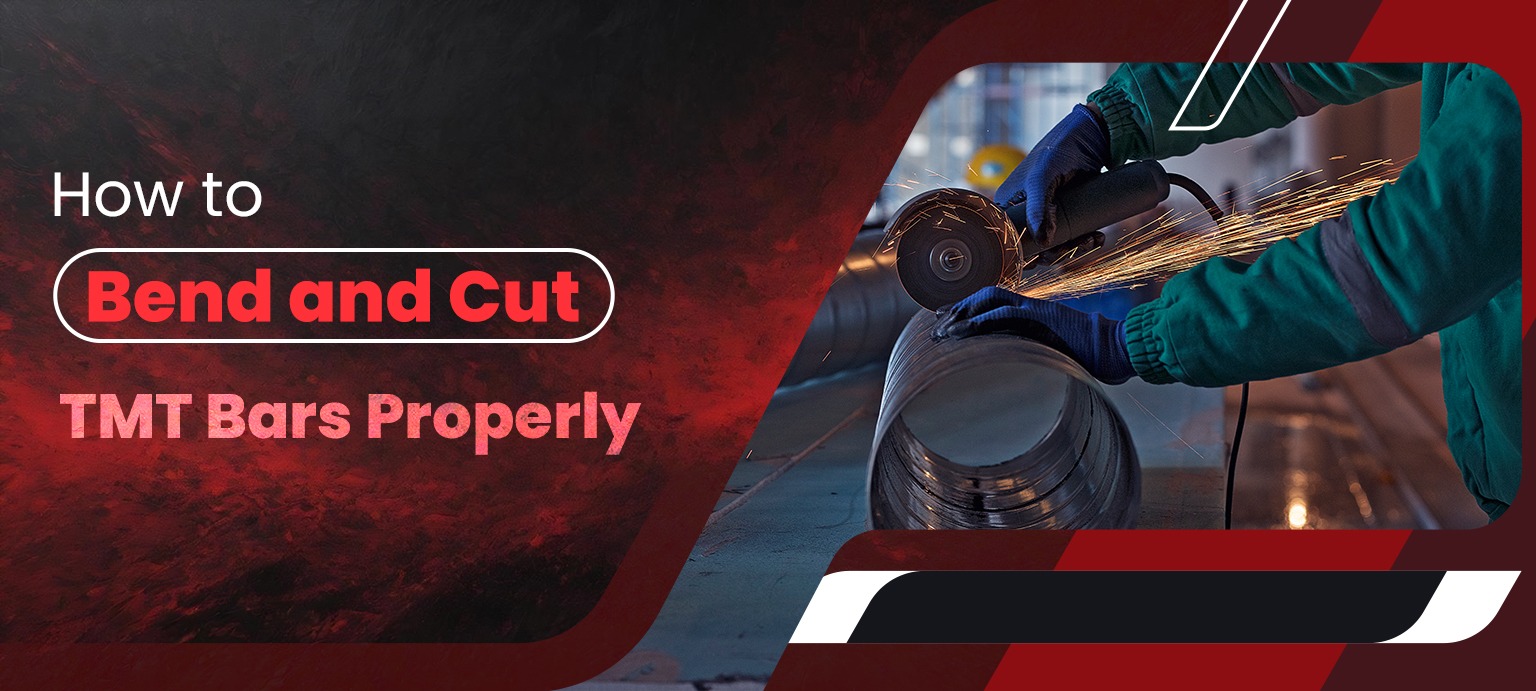
Constructing strong, safe, and long-lasting structures starts with the correct handling of TMT bars. Whether you’re building a home, commercial complex, bridge, or high-rise, proper cutting and bending techniques are essential for maintaining structural integrity, seismic safety, and material efficiency.
This step-by-step guide is designed for masons, contractors, site engineers, and builders across India, using Maithan Steel TMT Bars for best results.
Step 1: Choose the Right Tools for TMT Bar Cutting & Bending
Using the correct tools ensures precision, safety, and durability.
Essential Tools Required:
- Bar cutter (manual or hydraulic)
- Bar bender (manual or electric)
- Measuring tape and chalk/marker
- Safety gloves and protective goggles
Why This Matters
- Improper tools can damage the bar’s internal structure
- Increases risk of accidents and material wastage
- Maithan Steel TMT bars, though highly ductile, perform best with proper equipment for clean cuts and smooth bends
Step 2: Accurate Measuring & Marking Before Cutting
Common Mistake:
Cutting without proper measurement, leading to excess wastage and joint mismatch.
Correct Method:
- Measure the required length using a steel measuring tape
- Mark the cutting point clearly with chalk or a marker
- Ensure the bar is held firmly and placed on a stable surface
Pro Tip:
For Maithan Steel TMT bars, hydraulic cutters deliver:
- Straight and precise cuts
- Faster execution on site
- Minimal steel wastage
Step 3: Safe & Efficient Cutting of TMT Bars
Manual Cutting (Small Projects)
- Place the bar securely on a flat, stable surface
- Apply steady and even pressure using a bar cutter
- Avoid uneven or jagged cuts, as they weaken joints
Machine Cutting (Large Projects)
- Ideal for high-volume construction
- Ensures uniformity, speed, and accuracy
Safety First ⚠️
- Always wear gloves and goggles
- Metal sparks and sharp edges can cause serious injuries
Step 4: Bending TMT Bars Without Cracks
Common Mistake:
Applying sudden force or bending too quickly, which can cause micro-cracks.
Correct Bending Technique:
- Use a bar bender for smooth and uniform curves
- In manual bending, apply gradual pressure
- Maithan Steel TMT bars allow safe bending at 90° and 135° without cracking
Best Practices:
- Cold bending is safe – no heating required
- Avoid extremely sharp bends as they reduce tensile strength
Step 5: Quality Check After Cutting & Bending
After processing, always inspect TMT bars for:
- Smooth edges with no visible cracks
- Accurate bending angles (use a protractor if required)
- No rust or surface deformities
A proper inspection ensures load-bearing reliability and longer structural life.
Why Maithan Steel TMT Bars Are Easy to Work With
Maithan Steel TMT bars are engineered for Indian construction conditions and offer:
- High ductility – crack-free bending
- Precise sizing – reduced cutting wastage
- Superior strength – ideal for RCC and seismic zones
- BIS-certified quality – consistent and reliable performance
Final Tips for Masons & Contractors
- Always choose BIS-certified TMT bars like Maithan Steel
- Maithan TMT bars offer high strength yet excellent workability
- Store cut bars off the ground to prevent rusting
- Follow proper bending radius and site safety protocols
Conclusion
Correct bending and cutting of TMT bars play a critical role in building safe, strong, and durable structures. By using the right tools, accurate measurements, and controlled bending techniques, builders can reduce wastage, enhance safety, and improve overall construction quality.
Maithan Steel TMT Bars are designed for superior strength, high ductility, and excellent workability, making them the preferred choice for residential, commercial, and infrastructure projects across India.
By following these best practices and choosing Maithan Steel, builders can ensure better construction outcomes and structures that stand strong for decades.