
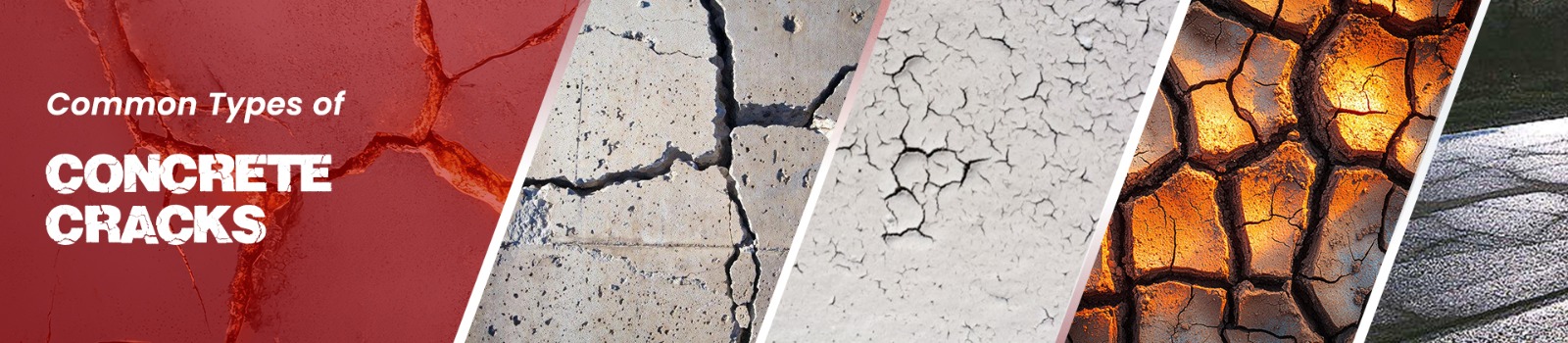
Concrete slabs are very popular in residential, commercial and industrial buildings and structures because of their strength and durability. Nevertheless, concrete slab cracking is a phenomenon that happens very often. Cracks in concrete slabs might be caused by shrinkage, temperature variations, loading conditions, soil movement or corrosion of reinforcement. Some cracks can be considered as merely a cosmetic problem and they do not harm the structure, but there are some cracks that are the result of the serious structural damage. Different types of cracks in concrete slabs must be familiar to engineers, contractors, and project owners so that they can take timely corrective and preventive measures.
At Maithan Steel, we stress how important proper design is together with quality materials and dependable steel reinforcement to be able to control the cracking and thus improve the long, term performance of concrete structures.
Why Do Concrete Slabs Crack?
Concrete is naturally very strong under compression, but it becomes quite weak under tension. When tension forces become more than the concrete can handle, it cracks. These forces can be caused by changes in the volume of the material, temperature fluctuations, applied loads, or poor support conditions. Even though cracks will always be there in some form, their penetration and seriousness can definitely be controlled to a large extent by proper workmanship and the use of quality steel reinforcement.
Common Types of Concrete Cracks
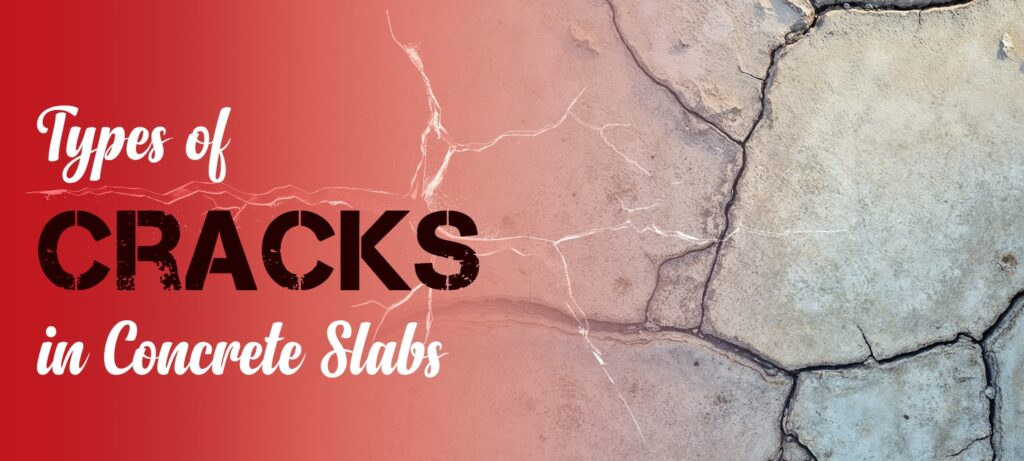
Plastic Shrinkage Cracks
Plastic shrinkage cracks develop when concrete is still in its plastic or fresh state, usually within a few hours after placement. These cracks form due to the rapid evaporation of surface moisture before the concrete gains sufficient strength.
Plastic shrinkage cracks are typically short, shallow, and randomly distributed on the surface. They often appear parallel to each other and are common in slabs exposed to high temperatures, strong winds, or low humidity. Although these cracks are usually non-structural, they can reduce surface durability and allow water penetration if not addressed properly.
Proper curing, protection from wind and sun, and adequate reinforcement help minimise plastic shrinkage cracking.
Drying Shrinkage Cracks / Map Cracking
Drying shrinkage cracks occur after the concrete has hardened and begins to lose moisture over time. As concrete dries, it shrinks, and if this shrinkage is restrained, cracks form. When these cracks appear as a fine, interconnected network on the surface, they are referred to as map cracking or crazing.
These cracks are generally shallow and cosmetic in nature, affecting the appearance rather than the structural strength. However, excessive drying shrinkage cracks can lead to surface deterioration and reduced durability.
Controlling the water-cement ratio, ensuring proper curing, and using quality reinforcement are effective ways to reduce drying shrinkage cracks.
Thermal Cracks
Thermal cracks result from expansion and contraction of concrete due to temperature changes. Concrete expands when heated and contracts when cooled. If these movements are restrained, tensile stresses develop, leading to cracking.
Thermal cracks may appear as random or linear cracks and are often associated with inadequate expansion or contraction joints. They are more common in large slabs, pavements, and mass concrete structures exposed to significant temperature variations.
Proper joint design, controlled placement temperatures, and adequate steel reinforcement are essential to manage thermal stresses and limit crack formation.
Heaving Cracks
Heaving cracks occur when the concrete slab is pushed upward due to expansion of the soil beneath it. This is often caused by moisture changes or freezing and thawing of water in the subgrade.
These cracks are usually deep and wide and are often accompanied by visible slab displacement or uneven surfaces. Heaving cracks are considered serious because they indicate problems with soil conditions and foundation support.
Preventing heaving cracks requires proper soil investigation, good drainage systems, adequate subgrade preparation, and reinforcement that helps the slab resist uplift forces.
Settlement Cracks
Settlement cracks form when parts of the slab sink due to uneven support from the underlying soil or subgrade. These cracks typically occur when the soil beneath the slab is poorly compacted or contains voids.
Settlement cracks are often vertical or diagonal and may be wider at the top. They commonly appear near load-bearing elements such as columns or walls. Depending on severity, these cracks can be structural and may compromise the stability of the slab.
Proper site preparation, uniform compaction of the subgrade, and effective load distribution through steel reinforcement are key to preventing settlement cracks.
Overloading Cracks
Overloading cracks develop when a concrete slab is subjected to loads greater than its design capacity. These cracks are commonly seen in industrial floors, warehouses, and storage areas where heavy machinery or excessive loads are applied.
Such cracks are usually wide and clearly visible and may be accompanied by slab deflection or surface damage. Overloading cracks are a strong indication of structural distress and should be addressed immediately to avoid failure.
Designing slabs for expected loads, avoiding misuse, and using high-strength steel reinforcement significantly reduce the risk of overloading cracks.
Shear and Flexural Cracks
Shear and flexural cracks are structural cracks caused by bending and shear stresses in the slab. Flexural cracks generally form in tension zones and appear as vertical cracks, while shear cracks are diagonal and occur near supports or concentrated loads.
These cracks indicate that the slab is experiencing stresses beyond its capacity due to excessive loads, long spans, or insufficient reinforcement. Shear and flexural cracks directly affect the load-carrying ability of the slab and require immediate structural evaluation.
Adequate structural design, proper reinforcement detailing, and the use of quality steel rebars are essential to prevent these types of cracks.
Corrosion Cracks
Corrosion cracks occur when the steel reinforcement embedded in concrete begins to rust. As steel corrodes, it expands, creating internal pressure that causes the surrounding concrete to crack and eventually spall.
These cracks often follow the line of reinforcement and may be accompanied by rust stains and surface delamination. Corrosion-related cracking significantly reduces structural strength and durability, especially in aggressive environments.
Ensuring sufficient concrete cover, good compaction, proper curing, and the use of high-quality, corrosion-resistant steel reinforcement helps prevent corrosion cracks.
Importance of Steel Reinforcement in Crack Control
Steel reinforcement does not prevent cracks entirely but plays a vital role in controlling their width, distribution, and impact. High-quality steel improves tensile strength, resists shrinkage and thermal stresses, and enhances overall structural performance.
At Maithan Steel, consistent quality, strength, and ductility of steel products help ensure better crack control and longer service life of concrete slabs.
Conclusion
Material properties, environmental conditions, loading, and construction practices influence cracks in concrete slabs. While some cracks are minor and cosmetic, others can pose serious structural risks. Understanding the various types of cracks—plastic shrinkage, drying shrinkage, thermal, heaving, settlement, overloading, shear and flexural, and corrosion—enables better decision-making during design, construction, and maintenance.
By combining proper engineering practices with high-quality steel reinforcement from Maithan Steel, it is possible to minimize cracking, improve durability, and ensure the safety and longevity of concrete structures.